The expectations of scientists who engage with society have increased over the past years. Where scientists in the past were applauded for simply explaining difficult research in laymen’s terms, nowadays we expect them to also inform policy, interpret science and interact with the public. But has the role that scientists take in society mirrored these changing expectations? Diewertje Houtman, Boy Vijlbrief and Sam Riedijk recently published an interesting article investigating this question, with a clear answer: no.
Knowledge deficit
The deficit model — where experts address an assumed knowledge deficit in their target audience and increase public understanding of science to increase public sympathy for and trust in science — is still rife amongst science communication professionals. Sara Anjos, Pedro Russo and Anabela Carvalho recently drew a similar conclusion after surveying science communicators working in the field of astronomy. As I have written before, only giving information has a very limiting effect on behaviour and does not guarantee impact in the audience you want to reach.
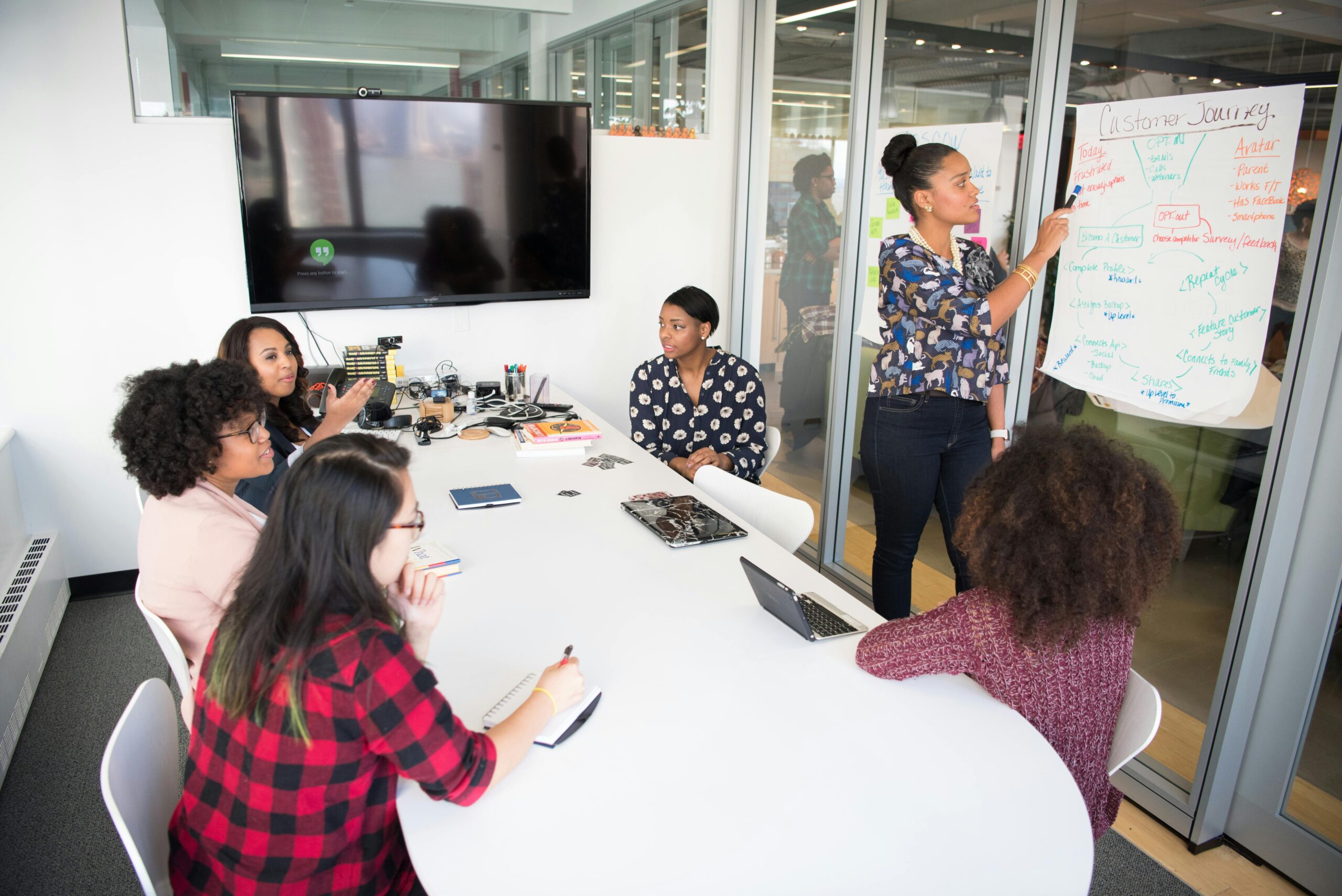
The next step to increase both the interaction with an audience and the possible impact is to engage in public dialogue, talking with instead of to the public. As Houtman and colleagues explain: “The dialogue model acknowledges that the public possesses important contextual knowledge, that there are other causes for skepticism, and that there are other forms of knowledge that influence public opinion. Experts should therefore engage in public communication of science with the aim of mutual learning rather than merely educating the public.”
To increase both the interaction with an audience and the possible impact, engage in public dialogue — talking with instead of to the public.
Organising a dialogue
Organising a dialogue with the public requires good preparation. Houtman et al. give some practical tips: do not strive for debate, but for dialogue; not to convince, but to explore. During the dialogue, focus primarily on initiating and maintaining a safe environment to share thoughts, arguments, intuitions, hunches, or insights. Be an expert where necessary, or requested, but above all, engage in conversation with the other participants in the dialogue.
Perspectivist flexibility
As philosopher Elke Wiss explains in her book Socrates on Sneakers: “Perspectivist flexibility is the ability to think outside your own framework, opinions, views. To explore and investigate the perspective of the other, without immediately having an opinion about it. To let go of your own vision for a moment, and to examine it clearly, calmly, blankly.”
Experts are not only the masters of knowledge in their field of expertise — they can also be masters in asking questions, stimulating the thinking of the publics they engage with. This nicely reinforces the definition that science-of-science-communication heavyweights Bucchi and Trench recently formulated for the field: science communication is the social conversation around science.
De verwachtingen van wetenschappers die zich met de samenleving bezighouden, zijn de afgelopen jaren toegenomen. Waar wetenschappers vroeger al werden geprezen als ze moeilijk onderzoek simpelweg in begrijpelijke taal uitlegden, verwachten we tegenwoordig dat ze ook beleid informeren, wetenschap interpreteren en met het publiek in gesprek gaan. Maar weerspiegelt de rol die wetenschappers in de samenleving spelen, deze veranderende verwachtingen? Diewertje Houtman, Boy Vijlbrief en Sam Riedijk publiceerden onlangs een interessant artikel over deze vraag, met een duidelijk antwoord: nee.
Kennisdeficit
Het deficitmodel — waarbij experts een verondersteld kennisdeficit bij hun doelgroep aanpakken om het publieke begrip van wetenschap te vergroten en daarmee het publieke vertrouwen in wetenschap te versterken — is nog steeds wijdverbreid onder wetenschapscommunicatieprofessionals. Zoals Houtman en collega’s uitleggen: “Het dialogische model erkent dat het publiek over belangrijke contextuele kennis beschikt, dat er andere oorzaken zijn voor scepsis, en dat er andere vormen van kennis zijn die de publieke opinie beïnvloeden. Experts zouden daarom aan publieke wetenschapscommunicatie moeten deelnemen met het doel van wederzijds leren.”
Om zowel de interactie met een publiek als de mogelijke impact te vergroten, ga je een publieke dialoog aan — praat met in plaats van tegen het publiek.
Een dialoog organiseren
Een dialoog met het publiek organiseren vereist goede voorbereiding. Houtman et al. geven enkele praktische tips: streef niet naar debat, maar naar dialoog; niet om te overtuigen, maar om te verkennen. Richt je tijdens de dialoog primair op het creëren en handhaven van een veilige omgeving voor het delen van gedachten, argumenten en intuïties. Wees een expert waar nodig of gevraagd, maar ga bovenal het gesprek aan met de andere deelnemers.
Perspectivistische flexibiliteit
Zoals filosoof Elke Wiss het uitlegt in haar boek Socrates op sneakers: “Perspectivistische flexibiliteit is het vermogen om buiten je eigen kader, meningen en opvattingen te denken. Om het perspectief van de ander te verkennen en te onderzoeken, zonder er direct een mening over te hebben. Om je eigen visie even los te laten en die helder, kalm en onbevangen te bekijken.”
Experts zijn niet alleen meesters in kennis op hun vakgebied — ze kunnen ook meesters zijn in het stellen van vragen, waarmee ze het denken stimuleren van de publieken waarmee ze in gesprek gaan. Dit sluit mooi aan bij de definitie die de wetenschapscommunicatiezwaargewichten Bucchi en Trench onlangs formuleerden: wetenschapscommunicatie is het maatschappelijke gesprek rondom wetenschap.